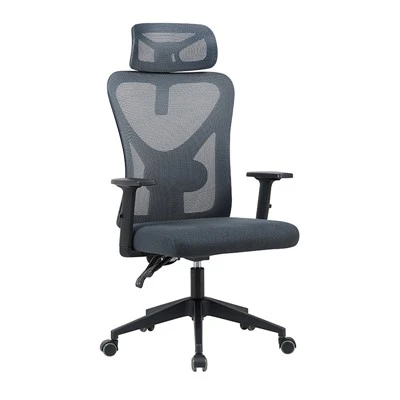
A few years ago, if someone mentioned ergonomic office chairs, most people would immediately think about mesh backs, adjustable armrests, lumbar support systems, and technical specifications. Product discussions often revolved around mechanisms, certifications, and ergonomic adjustments.
Recently, however, something interesting has been happening across the global office seating industry.More buyers are asking a different question:"Can this chair fit naturally into my daily life?"This change may seem subtle, but it is influencing product development decisions throughout the industry.
The Office Chair Is No Longer Just an Office Product
At recent furniture exhibitions and during conversations with overseas customers, our team noticed a common theme. Whether buyers came from Europe, North America, or Southeast Asia, many were no longer searching for a chair designed only for traditional office environments.Hybrid work has changed expectations.
A chair may be used for morning meetings, afternoon project work, evening online learning, and even casual relaxation after work. The boundaries between office space and living space are becoming less obvious.This shift is one reason why global brands such as Herman Miller, Steelcase, and Haworth have been paying increasing attention to residential-friendly office seating.The focus is no longer solely on ergonomics. Buyers now care equally about appearance, materials, comfort, and how a chair integrates into modern interiors.

Comfort Is Being Redefined
For many years, the industry associated comfort with adjustment functions.More adjustments meant better ergonomics.That principle still matters, but customer expectations are evolving.Today, many buyers describe comfort differently. They talk about how a chair feels after several hours rather than during the first few minutes. They notice whether the seat remains supportive during long video calls. They care about whether the chair looks inviting in a home office.
This is one reason why upholstered office chairs and foam-based seating designs have attracted increasing attention in recent years.The market is gradually moving away from the idea that ergonomic performance and visual warmth are mutually exclusive.Instead, buyers want both.
Design Is Becoming Part of Ergonomics
One lesson we have observed from leading international brands is that ergonomics is no longer viewed as a purely technical subject.Design itself is becoming part of the ergonomic experience.Rounded silhouettes, softer visual lines, refined upholstery details, and residential-inspired color palettes are becoming more common across the market.
Many modern users spend eight or more hours in the same room every day. The chair is no longer hidden inside a corporate office. It becomes part of the environment people see continuously.As a result, aesthetics have become a practical consideration rather than a luxury feature.
What This Means for Product Development
At ALB PARTNER, these changes have influenced how we evaluate new products.When reviewing designs, our discussions are no longer limited to adjustment mechanisms or structural performance. We also pay close attention to how users interact with a chair throughout different moments of the day.
For example, products such as our Ergonomic High-Back Reclining Footrest Office Chair have gained attention because they support multiple usage scenarios. Some users work in an upright position during focused tasks and later switch to a reclined posture during breaks or video meetings.Similarly, our High Back Manager PU Leather Office Chair continues to appeal to buyers who want executive-level comfort while maintaining a clean, contemporary appearance suitable for both offices and home workspaces.
Even task-oriented products such as the Modern Breathable Task Swivel Office Chair are evolving. Buyers increasingly expect breathable materials, ergonomic support, and modern styling in a single product rather than choosing one over the other.
The Growing Importance of Emotional Comfort
Another trend that deserves attention is something that cannot easily be measured on a specification sheet.Emotional comfort.People are spending more time than ever at their desks. A chair is no longer simply a tool used for work. It becomes part of an individual's daily routine.
Customers increasingly describe products using words such as welcoming, relaxing, balanced, and comfortable.These are not traditional ergonomic terms, yet they are becoming more influential in purchasing decisions.The most successful office chairs today often combine technical performance with a positive emotional experience.
Looking Ahead
The future of office seating will likely be shaped by a balance of ergonomics, flexibility, aesthetics, and well-being.
Adjustability will remain important. Certification standards such as BIFMA will continue to matter. Durability and structural quality will always be essential.
At the same time, buyers are expecting more from their office chairs than ever before.They want products that support productivity without feeling overly technical. They want professional performance without sacrificing visual appeal. They want office furniture that feels equally appropriate in a workplace, a home office, or a multifunctional living space.For manufacturers, this represents both a challenge and an opportunity.
For ALB PARTNER, it serves as a reminder that the future of office seating is not only about how people work, but also about how they live.